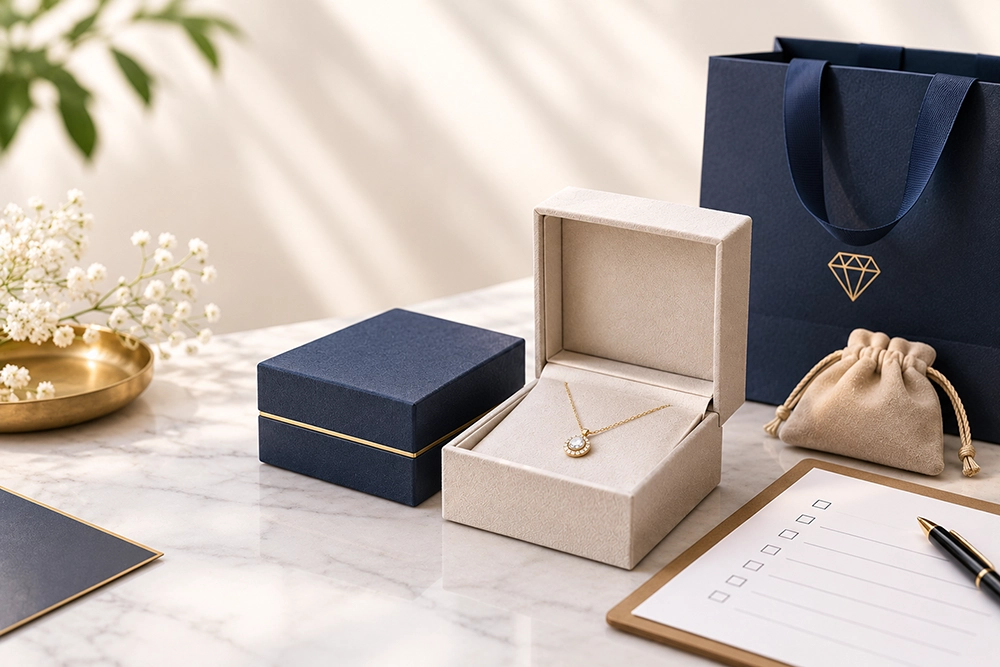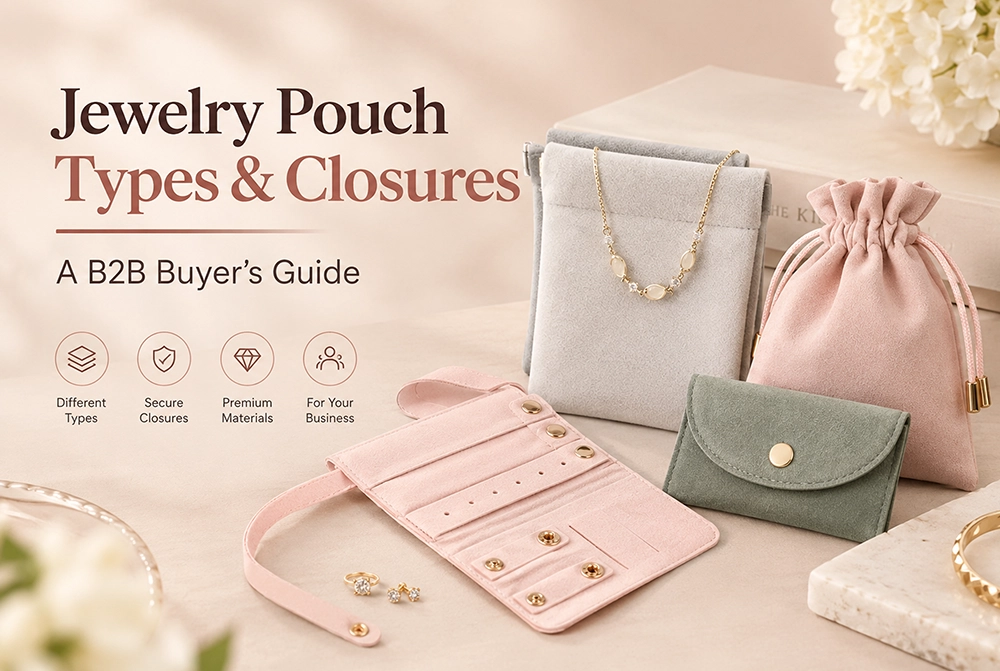


Custom jewelry pouches with logo can turn a simple fabric pouch into a consistent brand touchpoint. They can support product presentation, keep packaging visually consistent across sales channels and give customers a useful item to reuse after purchase.
The best result does not come from choosing the most expensive logo process. It comes from matching the branding method to the pouch material, artwork, order quantity and intended customer experience, then approving a production-representative sample before bulk manufacturing.
For most projects, the main decisions are the pouch construction, the logo method, the artwork file, the finished logo size and the quality standard used for approval. This guide explains how brands can compare those decisions when ordering custom jewelry pouches with logo from a packaging supplier. Brands looking at the supplier selection process in more detail can also review our jewelry pouch manufacturer guide for a broader framework covering supplier capabilities, customization, sampling, quality control, and production considerations.
Why Brands Use Custom Jewelry Pouches With Logo
A branded pouch is part of the product experience, not just an outer wrapper. The logo is seen when the jewelry is opened, stored, gifted or carried, so the finished result needs to work both visually and physically.
Custom logo pouches can help a brand:
- Create a consistent presentation across ecommerce, retail and wholesale orders
- Give small jewelry pieces a defined place during unboxing and storage
- Coordinate pouch color, material and logo treatment with boxes, cards and bags
- Make a simple packaging format feel more intentional and recognizable
- Build a reusable brand touchpoint without adding a large rigid component
These benefits depend on execution. A blurry mark, unstable color, rough backing or poorly positioned logo can make the packaging look less professional than an unbranded pouch. Logo customization should therefore be treated as a specification and quality-control project, not only a design choice.
Logo Printing Methods for Custom Jewelry Pouches
There is no single best printing method for every pouch. The correct process depends on the material surface, pile or weave, artwork detail, color contrast, quantity, target price and desired tactile effect. The table below is a starting comparison; the final method should be confirmed on a physical sample.
| Logo method | Typical visual effect | Often considered for | Main limitation to check |
|---|---|---|---|
| Screen printing | Solid ink mark with a clean graphic appearance | Cotton, some microfiber, flat fabric surfaces | Fine detail, registration and ink adhesion on textured fabrics |
| Foil or hot stamping | Metallic or solid foil accent | Premium fabric presentations and simple marks | Heat, pressure, surface texture and artwork complexity |
| Digital or transfer printing | Multi-color graphics, gradients or repeat patterns | Suitable smooth or coated fabrics | Color profile, film feel, wash/rub behavior and surface compatibility |
| Embroidery | Raised thread texture | Simple wordmarks, badges and fabric-led designs | Small details, reverse-side backing, bulk and contact with jewelry |
| Woven or applied label | Separate branded label sewn or attached to pouch | Flexible branding and detailed woven marks | Label edge, placement, thickness and contact with jewelry |
| Debossing or embossing | Indented or raised tactile mark | Structured or suitably backed materials | May be subtle or unsuitable on soft, loose or high-pile fabrics |
Screen Printing
Screen printing can be a practical option for solid-color logos, short wordmarks and simple icons. It is often considered for cotton and selected microfiber or satin constructions because the surface can provide a relatively controlled print area.
The result depends on ink, mesh, curing, fabric texture and the number of colors. A logo that looks sharp on a smooth sample may lose fine lines when printed over a nap, loose weave or gathered section. Ask the supplier to test the smallest text, thinnest strokes and the final logo position on the actual pouch.
Screen printing may be a sensible choice for a cost-conscious repeat order, but cost alone should not decide the process. Confirm color appearance, surface feel, rub resistance and any interaction between the ink and the fabric before approval.

Screen Printing Jewelry Pouch
Foil and Hot Stamping
Foil or hot stamping can create a metallic, high-contrast or understated solid logo. Gold, silver, rose gold, matte and other foil effects may be available depending on the supplier and material. This method is often considered for premium jewelry packaging because the mark can feel crisp and visually distinct.
The result is sensitive to temperature, pressure, dwell time, die quality and the pouch surface. A raised velvet pile, soft backing or uneven seam can affect registration and coverage. Foil is usually more predictable with simplified artwork than with gradients, photographs or very fine distressed details.
Do not describe a hot-stamped logo as permanently fade-proof or waterproof without a product-specific test. The correct approval check is the finished sample under the handling, storage and cleaning conditions the pouch is expected to experience.

Foil and Hot Stamping Jewelry Pouch
Digital and Transfer Printing
Digital or transfer processes can support multi-color artwork, gradients, illustrations and limited-edition patterns where the material and equipment are compatible. They may reduce the need for a separate screen for every color, but the economics and result depend on order quantity and the selected substrate.
Review how the transfer sits on the surface. Some methods create a more noticeable film or hand feel, while others integrate more subtly into the textile. Check color conversion, fine detail, edge sharpness, cracking, peeling and rub behavior on a sample that uses the final fabric.
Digital printing is not automatically the best choice for a detailed logo. If the brand mark is a single color, a simpler process may create a cleaner and more economical result. The design, material and quantity should be evaluated together.

Printing jewelry pouch
Embroidery and Woven Labels
Embroidery creates a raised thread effect and can work well for bold lettering, monograms or simple symbols. Woven labels can hold more detailed artwork than a stitched mark, depending on label size and construction.
Both options add material to the pouch. Inspect the reverse side, thread ends, label edges and any backing that could touch the jewelry. A hard or rough reverse may be unsuitable inside a pouch for polished metal, pearls or delicate finishes. The added thickness can also affect how the pouch folds into a jewelry box.

Embroidery jewelry pouch
Debossing and Embossing
Debossing presses a mark into a surface, while embossing raises it. These methods are often associated with understated tactile branding, but they require a material with enough structure and a suitable backing to hold the shape.
Soft, loose or high-pile fabrics may not retain a clear relief. A supplier may recommend a supported patch, label or different construction rather than pressing directly into the pouch. Approve the effect at the final logo size and under the lighting used for product photography.

Debossing Jewelry Pouch
How to Match the Logo Method to the Pouch Material
Material names are only a starting point. Velvet, satin, suede-like textiles, microfiber and cotton can each vary in fiber composition, thickness, weave, pile and backing. Before selecting a logo process, brands should first understand how different pouch materials affect appearance, durability and production requirements. Our jewelry pouch materials guide provides a broader overview of common materials and the factors brands should consider when selecting a pouch for their packaging project.
Velvet and Pile Fabrics
Raised pile can change how light reflects around a logo and can make fine artwork appear less even. Simplified screen prints, foil effects or a separate label may work better than very small detailed marks, but the actual process must be tested. Confirm pile direction, pressure marks, logo coverage and whether the closure gathers the printed area.
Suede and Faux Suede
Clarify whether “suede” means genuine leather suede, synthetic faux suede or microsuede. These materials have different surfaces and production requirements. Test color rubbing, surface consistency, logo contrast, edge contact and whether a pressed mark recovers after handling.
Microfiber
Microfiber can provide a relatively smooth area for screen printing, transfers or applied branding, but grades vary. Ask for fiber composition, thickness, surface finish and backing. Packgenio’s custom microfiber jewelry pouch and microfiber pouch collection are useful references for discussing available formats, subject to current product confirmation.
Satin
Satin reflects light, so wrinkles, pulls and registration errors can be visible. A logo may need stronger contrast than expected, and heat-sensitive or slippery surfaces require process testing. Inspect the print or transfer under direct light and after the pouch has been packed and folded.
Cotton
Cotton can suit screen printing, labels and simple graphic marks, but the weave and weight affect edge definition. A coarse canvas may support bold artwork but lose small details. A tighter weave may reproduce finer lines more clearly. Packgenio’s cotton canvas jewelry pouch provides a product example for reviewing pouch structure and branding together.
Artwork Requirements for Custom Logo Pouches
To ensure a smooth production process, please provide your logo artwork in a high-quality format. Vector files such as AI, EPS, PDF or SVG are preferred because they can be resized without losing quality.
If you only have a PNG or JPG logo, that’s okay. Packgenio can help convert your logo into a vector file free of charge before production.
When sending your artwork, please also provide:
- Logo size or preferred size
- Logo position
- Logo color or Pantone reference, if available
- Preferred logo method, such as printing, embossing, embroidery or hot stamping
Before mass production, Packgenio will confirm the logo size, position and production method with you to make sure the final result matches your expectations. This makes it easier for brands to move from an idea or existing logo to a production-ready custom pouch.
Sample Checks Before Bulk Production
Before starting bulk production, always check the physical sample carefully. This is the best time to make changes to the logo, material, size or pouch design before producing a large quantity.
Check the Logo
Make sure the logo is:
- Clear and sharp
- The correct size
- In the correct position
- The right color
- Easy to see when the pouch is both open and closed
For drawstring pouches, also check the logo after the pouch is filled and gathered, as the fabric may change shape slightly.
Check the Material and Color
Compare the sample with your approved material and color reference. Check whether the fabric looks and feels as expected, and make sure the logo finish matches your requirements.
Check the Pouch Construction
Look at the stitching, seams, drawstring, labels and overall finishing.
It is also a good idea to place the actual jewelry inside the pouch. Make sure there are no loose threads, sharp edges or other details that could scratch or catch on the jewelry.
Check the Size
Make sure the pouch is large enough for the jewelry it is designed to hold, but not unnecessarily oversized. For a more detailed reference, see our guide to jewelry pouch sizes, which covers practical starting dimensions for rings, earrings, bracelets and necklaces.
Test Before Approval
Before approving the sample, open and close the pouch several times and gently rub the logo to check its basic durability.
If the pouch will be exposed to moisture, frequent handling or cleaning, discuss the appropriate testing requirements with your supplier before mass production.
Once the sample is approved, keep the approved sample, logo artwork and color reference as a standard for future production and reorders.
Common Custom Logo Pouch Mistakes
Choosing the Logo Method Too Early
Different fabrics require different logo methods. A process that works well on cotton may not look the same on velvet, satin or faux suede.
Choose the material first, then select the logo method based on the actual fabric.
Sending Only a Screenshot
A screenshot is useful as a reference, but it may not be suitable for production.
Whenever possible, provide a vector logo file such as AI, EPS, PDF or SVG.
Don’t have one? Packgenio can help convert your existing logo into a production-ready vector file free of charge.
Approving Only a Digital Mockup
A digital mockup can show what the logo should look like, but it cannot show the actual fabric texture, color, feel or final logo effect.
Always check the physical sample before bulk production.
Using the Same Logo Size for Every Pouch
A logo that looks perfect on a large pouch may look too large or too small on a smaller pouch.
Choose the logo size based on the pouch size and overall design.
Not Keeping an Approved Sample
After approving the sample, keep it together with the final logo artwork and color reference.
This gives both the buyer and supplier a clear reference when producing future orders or reorders.
Information to Include in a Quote Request
To receive a useful quotation for custom jewelry pouches with logo, provide:
- Pouch material, color and preferred construction
- Finished dimensions and the jewelry or packed unit being enclosed
- Closure type, lining, insert, card or separator requirements
- Logo artwork and preferred application method, if known
- Logo size, position and color or foil reference
- Quantity by size, color and design
- Individual packing and carton requirements
- Target delivery market and shipping destination
- Required sample, approval and production milestones
If the logo process is not yet decided, ask the supplier to compare two or three feasible methods on the selected material. This often produces a more useful answer than requesting one generic price for “logo printing.”
Packgenio can review pouch format, material, logo application and related packaging requirements through its custom packaging process. Brands can also compare jewelry pouch formats and coordinate pouches with jewelry boxes when the project needs a complete presentation set.
FAQ About Custom Jewelry Pouches With Logo
What Is the Best Logo Method for a Jewelry Pouch?
The best method depends on the material, artwork, quantity, color requirements and desired tactile effect. Screen printing may suit simple solid marks, foil can create a metallic accent, digital or transfer processes can support more complex graphics, and embroidery or labels can add texture. Approve the final method on a production-representative sample.
Can I Use the Same Logo File for Every Printing Method?
You can usually begin with one master vector logo, but the production version may need process-specific adjustments. Embroidery may need thicker strokes, foil may require simplified shapes, and a small woven label may need fewer details. Ask the supplier to confirm the final artwork setup.
What File Should I Send for a Custom Logo Pouch?
An editable vector file such as AI, EPS, editable PDF or SVG is usually the best starting point. Send a high-quality bitmap only when a vector is unavailable, and ask the supplier to review its suitability before sampling. Keep the original editable master file for future reorders.
How Do I Prevent a Logo From Looking Blurry?
Use production-ready artwork, choose a process compatible with the pouch surface, avoid artwork that is too small or detailed for the method, and approve a physical sample. The fabric texture and final logo dimensions matter as much as file resolution.
Are Hot-Stamped or Printed Logos Permanent?
No logo process should be described as permanently fade-proof without evidence for the exact fabric, process and handling conditions. Review rub, fold, closure and storage behavior on the sample, and define any additional durability test with the supplier.
Can Packgenio Help Choose the Logo Method?
Packgenio can review the pouch material, artwork, size and intended presentation to identify feasible customization options. Share the logo file, material preference, quantity, pouch dimensions and destination through the Packgenio contact page so the project can be evaluated against the actual requirements.
Free Artwork Support from Packgenio
Don’t have a vector logo file? No problem. Packgenio can convert your existing logo into a production-ready vector file free of charge as part of the custom pouch development process.
Choosing the Right Custom Jewelry Pouches With Logo
Successful branded pouch production is a chain of connected decisions. The material affects the logo method, the logo method affects artwork and sampling, and the finished pouch must still work with the jewelry, closure and outer packaging.
Start with the actual jewelry and desired customer experience. Then confirm the pouch construction, compare suitable logo processes, prepare a clean artwork file and approve a physical sample at final size. Keep the approved file, placement proof, color reference and sample as the standard for bulk production and future reorders.
Whether you need a simple screen-printed pouch for an ecommerce collection, a metallic logo for premium gifting or a coordinated pouch-and-box set, contact Packgenio with your artwork, material preference, quantity and packaging requirements for a practical customization review.