
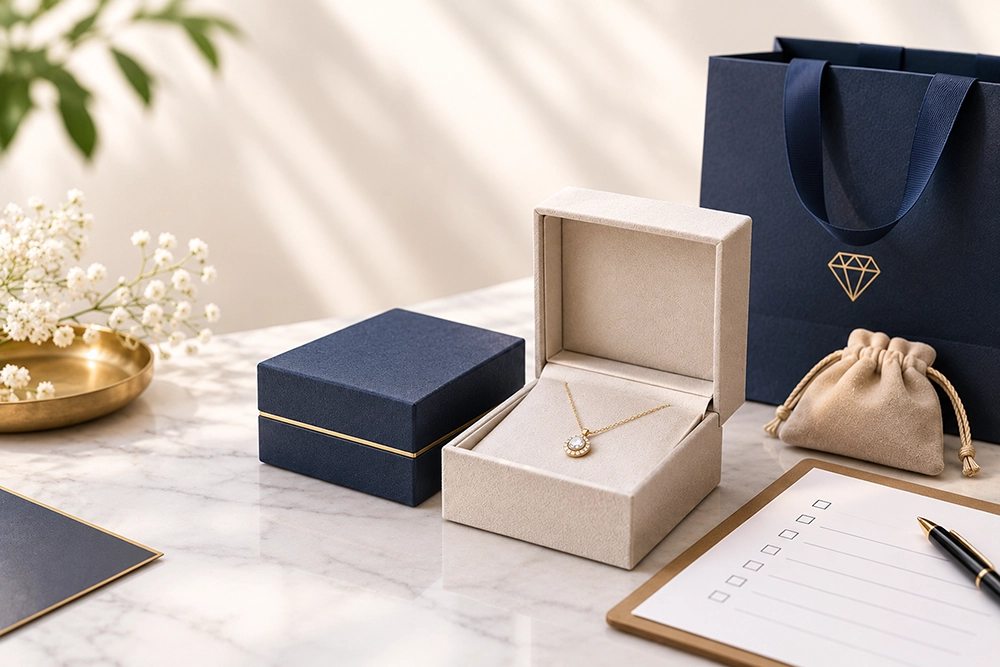
When a jewelry packaging project goes wrong, the cause is often not the factory’s machinery. It is an incomplete brief. A supplier receives a logo file but not the product dimensions, receives a target quantity but not the launch date, or is asked for a “luxury pouch” without a defined material, closure, insert or inspection standard.
A clear jewelry packaging specification gives every supplier the same information. It helps your team compare like-for-like quotations, makes sampling faster and reduces changes after bulk production starts. The checklist below is designed for jewelry brands, designers, retailers, wholesalers and private-label businesses that need boxes, pouches, cards or a coordinated packaging set.
1. Start with the jewelry, not the packaging format
Record the product that the package must hold:
- Product type: ring, earrings, necklace, bracelet, pendant, charm or set.
- Finished dimensions, including the largest component and any chain length that must be controlled.
- Approximate weight and any fragile, sharp or easily scratched surface.
- Quantity per SKU and the number of SKUs in the launch.
- Sales channel: boutique retail, e-commerce, wholesale, gifting, subscription or event use.
- Whether the customer will reuse the pouch or box for storage.
This information changes the recommendation. A ring may need a firm slot. A necklace may need a card, hook or internal restraint to reduce tangling. A lightweight earring sold at a market may be better served by a display card and small pouch than by a rigid box. A collection with several product types may need a shared visual system but different internal structures.
Packgenio’s jewelry packaging solutions by jewelry type can be used as a starting point for comparing ring, necklace, bracelet, earring and set requirements.
2. Define the packaging architecture
Write down the exact components you want quoted. “Packaging” can mean one pouch or a complete retail set, and the cost and production path are very different.
| Component | Decisions to specify | Typical reason to include it |
|---|---|---|
| Jewelry box | Structure, outer dimensions, lid style, insert, opening experience | Retail presentation and stronger structure |
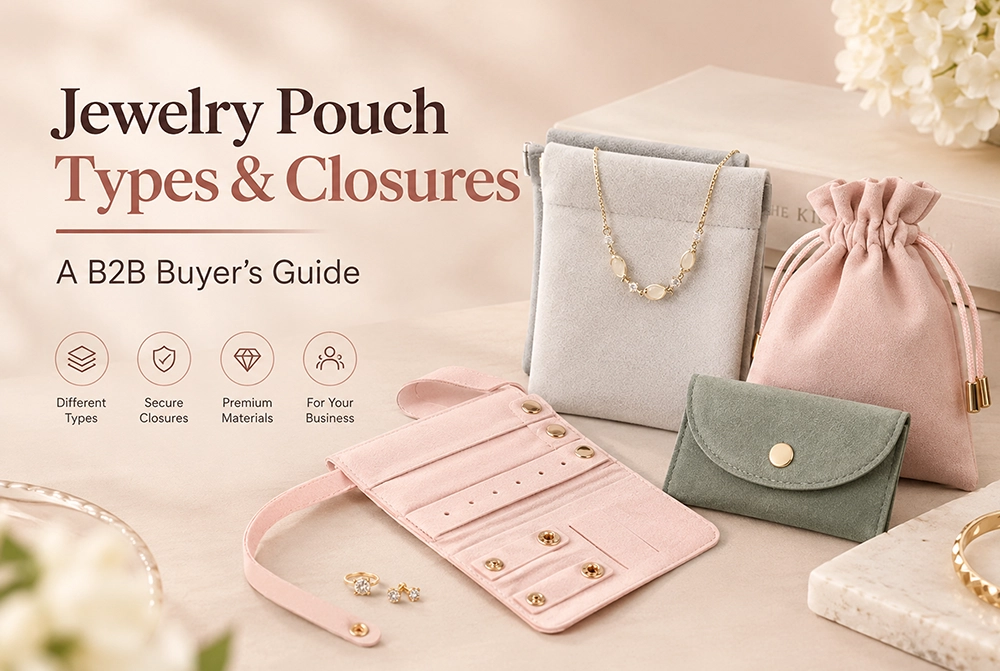
| Jewelry pouch | Flat or gusseted shape, finished size, closure, lining | Soft protection, gifting, travel or inner packaging |
| Jewelry card | Card size, thickness, holes, slots, print sides | Earrings, chains, charms and display programs |
| Insert | Material, cut-outs, firmness, removable or fixed | Product stability and display angle |
| Paper bag | Bag size, handle, paper, print, reinforcement | Retail handover and coordinated branding |
| Accessories | Care card, thank-you card, sticker, ribbon, tissue | A consistent unboxing or gifting system |
State whether the supplier should quote each item separately and as a set. Separate line items make it easier to reduce cost later without redesigning the whole program.
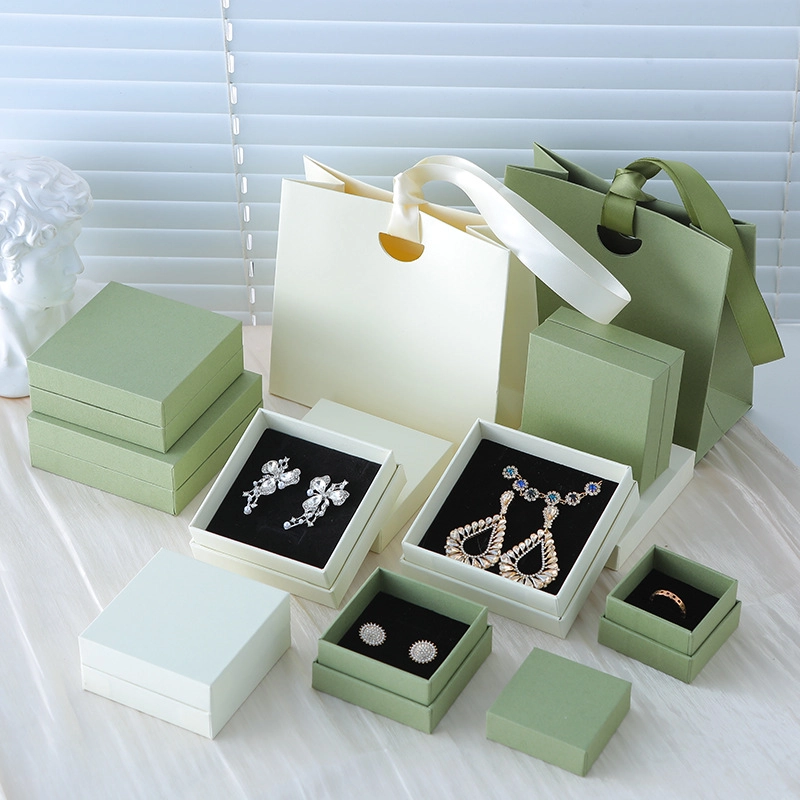
Different jewelry packaging
3. Capture the physical specification
Do not approve a size from a screen image alone. Send a dimensioned drawing or a physical product sample when possible. Include the internal usable space, not only the outside dimensions.
For a box, specify outside length, width and height, lid/base construction, insert depth, clearance around the jewelry and the desired presentation angle. For a pouch, specify finished flat dimensions, seam allowance, opening width, cord length, closure position and whether the pouch must accommodate a box or card inside it.
Allow enough clearance for the real packing action. A pouch that technically fits the product but is difficult to open creates labor and customer-service problems. An oversized box increases void fill, carton volume and shipping cost. A tight insert can press against a stone, chain or finish.
For a complete size framework, link to the jewelry pouch size guide, then ask the supplier to validate the proposed size against your actual jewelry.
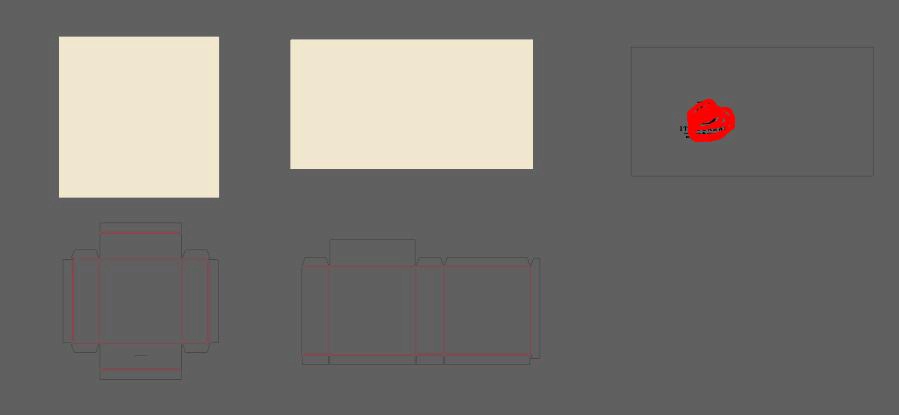
Design
4. Specify the material in production terms
Material names are not enough. “Velvet,” “suede,” “cotton” and “leatherette” can describe several constructions with different handfeel, thickness, backing and logo results. A useful brief records:
- Fiber or substrate, where relevant.
- Fabric weight, board thickness or material gauge.
- Surface finish and handfeel.
- Lining, backing, foam or insert construction.
- Color reference, such as a Pantone target or approved physical swatch.
- Whether recycled or certified content is required and what evidence is expected.
Packgenio’s jewelry packaging materials overview and jewelry pouch materials guide explain why the material decision should be linked to structure, protection, logo method and production stability. They should support the brief, not replace a physical sample.
For paper-based packaging, ask how a sustainability claim is documented. FSC explains that chain-of-custody certification tracks certified forest-based material through the supply chain; do not treat a generic “eco” description as equivalent to certification. See the FSC paper and packaging guidance. ISO 18601 also sets general requirements for applying the ISO packaging-and-environment standards; the ISO 18601 page is the appropriate reference for a formal sustainability discussion.
5. Define the branding method and artwork package
List each branded surface and the required finish. Options may include hot foil stamping, embossing, debossing, screen printing, UV printing, heat transfer, woven labels, printed cards or logo stickers. The right choice depends on the substrate, logo size, color count, surface texture and order quantity.
Your artwork package should include:
- Vector logo files, preferably AI, EPS or editable PDF.
- Brand colors and any approved color references.
- A marked-up drawing showing logo position and maximum size.
- Required reading direction and distance from seams or edges.
- A note identifying which elements are fixed and which may be adjusted for production.
Ask for a logo proof on the actual material. A finish that looks sharp on coated paper may lose detail on a pile fabric. A dark foil on a textured surface may need a different contrast than the same foil on a rigid box.
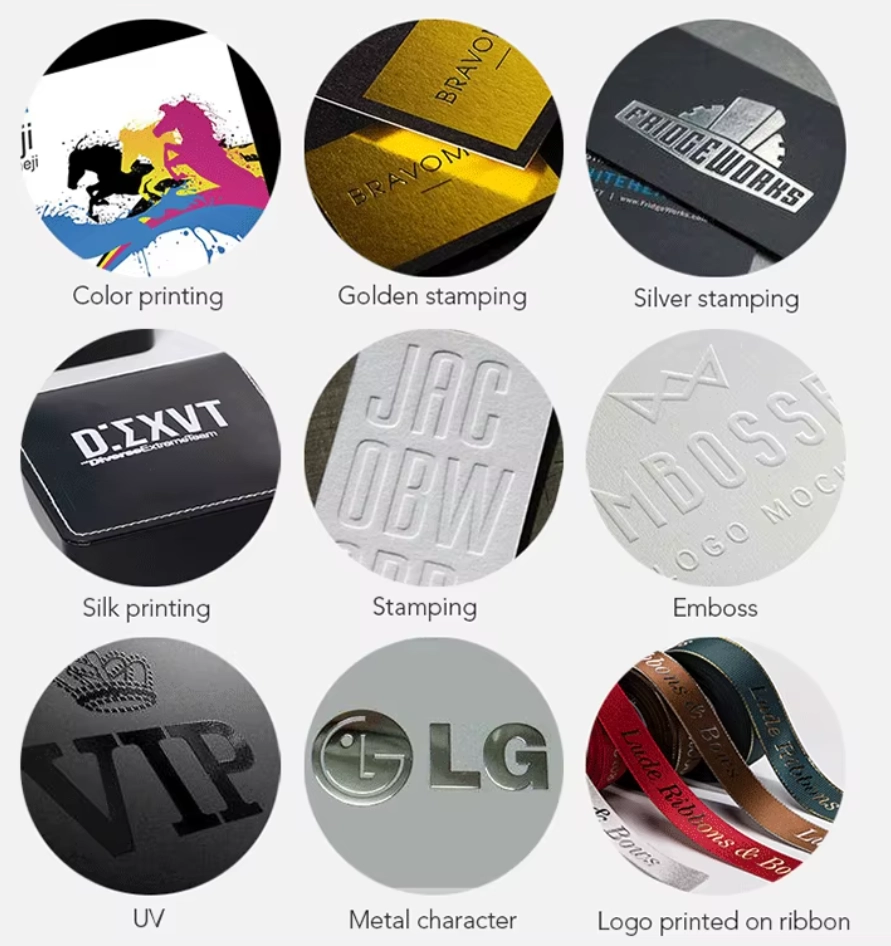
Logo process
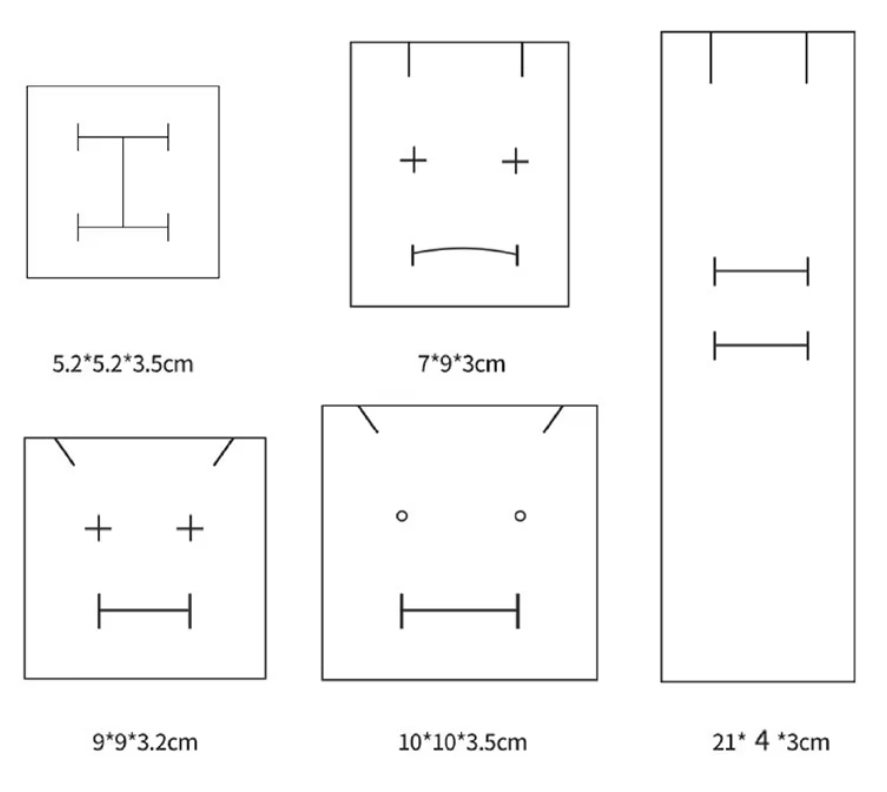
sponge insision
6. Include the order and timing assumptions
The RFQ should state the target quantity per item, quantity by color, number of SKUs, expected repeat-order pattern and delivery country. Ask the supplier to separate:
- Sample or prototype cost.
- Tooling, plate or setup cost.
- Unit cost at each useful volume tier.
- Packaging and carton cost.
- Inspection or testing cost, if required.
- Freight basis and what is excluded from the quotation.
Do not compare one supplier’s factory price with another supplier’s delivered price. Use the same commercial basis and ask what causes MOQ to change. A lower quantity may be possible for a stock structure with a simple logo, while a new mold, custom color, special material or multi-process finish can require a different minimum.
7. Build a sample approval record
The approved sample should be more than a photograph. Record the sample date, version number and the person who approved it. Check:
| Checkpoint | What to review |
|---|---|
| Product fit | Jewelry enters, sits and exits without force or movement |
| Appearance | Color, texture, seams, edges, corners and overall proportion |
| Branding | Position, scale, sharpness, contrast and finish consistency |
| Function | Closure, drawer movement, lid alignment, cord strength and card slots |
| Protection | Contact points, abrasion risk, insert firmness and movement in transit |
| Packing | Individual wrapping, carton count, barcode or label requirements |
Keep the approved physical sample and the written specification together. If a later repeat order is compared only with a digital image, small changes in color, thickness or logo placement can go unnoticed.
8. Add the quality and shipping requirements
Describe the defects that matter to your business. For example, you may reject visible glue marks, uneven foil, broken fibers, incorrect logo orientation, crushed corners, open seams or color variation beyond an agreed tolerance.
If the packaging will be shipped through parcel networks, define the outer-carton and drop or vibration expectations with the supplier. ASTM publishes packaging test methods and practices for distribution hazards; its packaging standards overview is a useful starting point when a formal test plan is needed. The exact test should match the shipping system, product risk and destination requirements.
9. Send a one-page RFQ summary
End the brief with a compact summary the supplier can quote without searching through a long email:
Product: 925 silver necklace with 45 cm chain
Packaging: pouch + printed card + outer box
Pouch: 90 x 110 mm finished size, drawstring, soft microfiber, black
Box: lid-and-base paper box, 75 x 75 x 28 mm, removable insert
Branding: one-color screen print on pouch; foil logo on box lid
Quantity: 1,000 sets; confirm price tiers at 500 / 1,000 / 3,000
Target sample date: [date]
Target delivery: [country and date]
Required checks: fit, logo position, color, closure, carton packing
This format gives the supplier enough information to identify missing decisions before quoting. It also gives your purchasing team a clean basis for comparing proposals.
FAQ
What should a jewelry packaging supplier receive before quoting?
Send the jewelry type and dimensions, packaging components, target quantity, material direction, logo artwork, delivery destination and required date. Include reference images or a physical sample when fit is important.
Should I choose a pouch or a box first?
Start with the product, sales channel and customer experience. A pouch can be lighter and more flexible; a box can provide stronger structure and gift-ready presentation. Many brands use both as a coordinated set.
How many samples should a B2B buyer approve?
Approve at least one fully finished sample for fit, appearance and branding. If the project has multiple materials, colors or jewelry sizes, approve the variants that could change production decisions.
What is the most common mistake in a packaging specification?
Using a broad description such as “premium black pouch” without defining the finished size, material construction, closure, logo method, color reference and inspection points.
Conclusion
A good jewelry packaging specification turns a visual idea into a production conversation. Define the product fit, components, dimensions, materials, branding, quantity, approval checks and shipping requirements before comparing quotes. The result is a clearer RFQ, a more useful sample and fewer surprises when the order moves into bulk production.
Packgenio supports custom jewelry boxes, pouches, cards, inserts, bags and coordinated packaging sets. Share your jewelry dimensions, packaging brief, logo files and target quantity so the team can recommend a realistic route from sample to repeat production.